Cr-V vs S2 Steel Tools UK: A Practical Comparison
Quick answer: Neither alloy wins every Cr-V vs S2 steel tools UK comparison. Cr-V is widely used for socket bodies and many general hand tools, while S2 is commonly used at driver-bit working ends; real performance still depends on the exact grade, heat treatment, geometry and job. Choose the complete tool for its intended load, not the alloy stamp in isolation.
What the two labels do—and do not—tell you
“Cr-V” is shorthand for a chromium-vanadium alloy family, not one guaranteed recipe or performance level. “S2” identifies a shock-resisting tool-steel grade, but the finished result still depends on heat treatment and the shape of the working end. A listing that shows only an alloy name has not told you the hardness, toughness, dimensional tolerance or whether the claim is genuine.
That is why a simple “S2 is stronger” answer is misleading. A hard tip may resist wear but still fail if its geometry is poor or it is used outside the maker's intended load. A tougher body may survive leverage but fit a fastener badly. Compare like-for-like tools and read the maker's application, not just the material badge.
A real design can use both materials
TengTools publishes a 3 mm hex bit socket specification that uses an S2 steel bit with a Cr-V socket body. That is a useful counterexample to the idea that buyers must choose one alloy for an entire tool. The working bit and square-drive body perform different jobs, so the maker assigns material and geometry to each part.
- Driver bits: inspect profile accuracy, torsion design where specified, working length and the fasteners the bit is rated to drive.
- Sockets and spanners: inspect the fastener contact geometry, drive fit, finish and rated use. Do not infer an impact rating from Cr-V or S2 text alone.
- Precision bench tools: tip fit and control can matter more than headline hardness. Test the fit on a clean, expendable fastener before touching a scarce board or device.
What this means at a precision repair bench
An experienced hobbyist moving from an 858D-style station to work on 0201 or 01005 components already knows that “more powerful” is not the same as “more controllable”. The same discipline applies to hand tools: a premium alloy cannot compensate for a loose driver profile, an oversized handle under a microscope or the wrong tool for the process.
Keep the failure modes separate. A correctly fitting S2 driver bit may reduce wear at the screw interface. It cannot stop a tiny component moving under hot air; that depends on airflow, nozzle, technique and the board process. Conversely, buying a micro hot-air pencil does not improve a rounded driver bit. Treat each problem with evidence from the relevant tool.
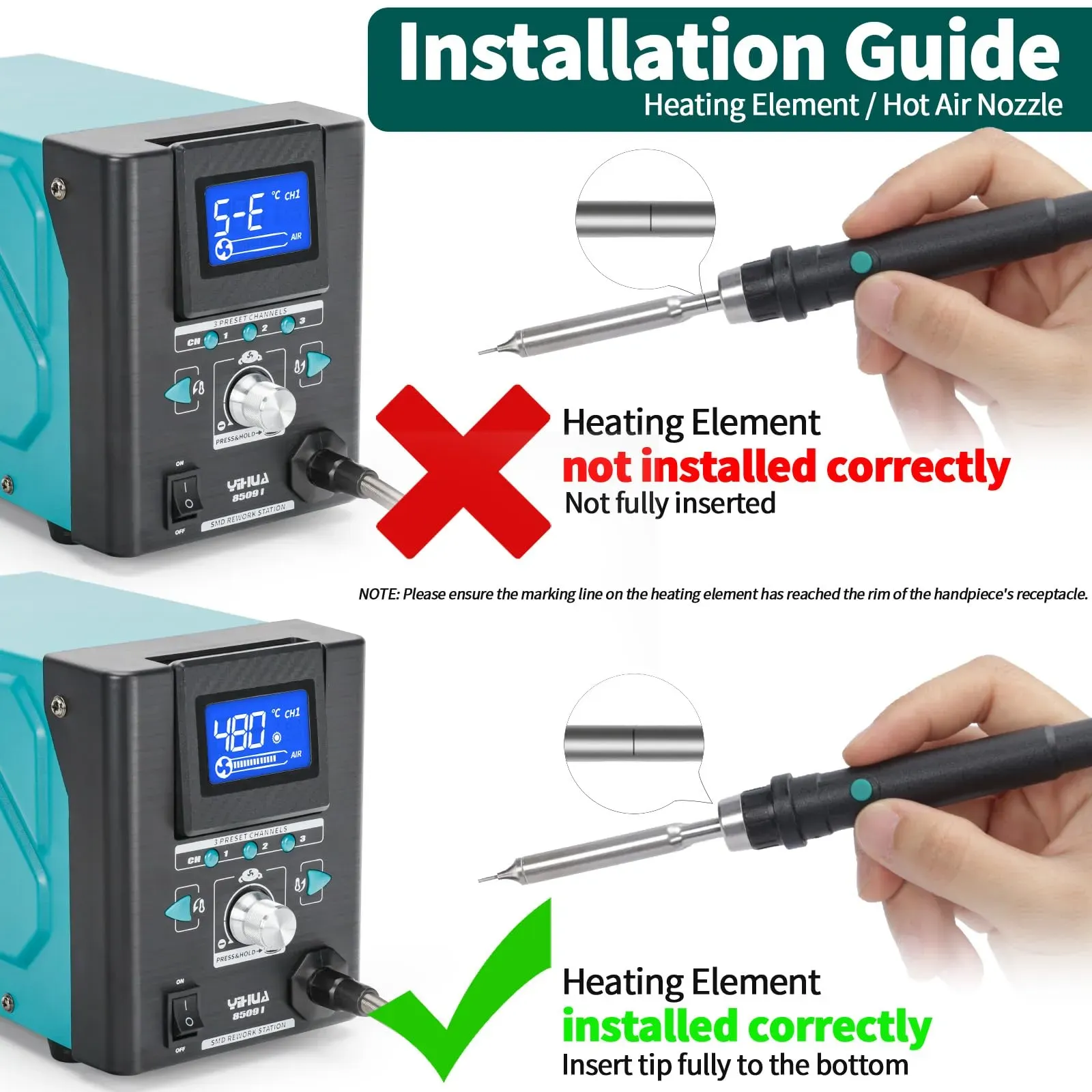
YIHUA's manufacturer page describes the 8509-I as a micro hot-air pencil with eight nozzle diameters from 0.5 mm to 4.0 mm. The manufacturer source checked for this article does not publish a litres-per-minute airflow value, so this guide does not infer one. The Yihua Forge listing showed £797.98 on 20 July 2026; price and seller terms can change.
A five-part comparison before buying
- Write down the exact fastener, load and hand or power tool that will drive it.
- Check the manufacturer's part number, material declaration and intended use.
- Compare profile geometry, replaceability and rated use, not a generic hardness number copied by a marketplace seller.
- Reject tools that rock, cam out or arrive with damaged working ends.
- Keep the invoice and model record so a failed part can be traced and replaced.
For the wider purchase sequence, return to the best hand tools UK repair-shop guide. This page owns only the material comparison.
Questions buyers ask
Is S2 steel always better than Cr-V?
No. The materials are used in different grades, shapes and heat treatments. The better choice is the finished tool that is specified for the actual load and fastener.
Why do some bit sockets use both S2 and Cr-V?
The bit and socket body have different roles. A maker can use S2 at the working bit and Cr-V at the drive body, then design and heat-treat each part for that role.
Can I verify the alloy from an online listing alone?
Usually not. A listing can provide a manufacturer part number and declaration, but the printed alloy text alone does not prove composition, treatment or authenticity.
Does tool steel choice stop 0201 parts moving under hot air?
No. Tool steel affects the hand tool, not hot-air control. Tiny-component movement depends on the rework process, including airflow, nozzle selection, heat and technique.
Sources and fact-check boundary
Sources were checked on 20 July 2026. Standards and seller terms can change; use the current manufacturer, standards-body or regulator text for a live decision.
Related precision-rework equipment
The linked page displayed £797.98 on 20 July 2026. Check its current price, specification, delivery and support terms before ordering.
View the YIHUA 8509-I — £797.98